Business Name: BeeHive Homes Assisted Living
Address: 16220 West Rd, Houston, TX 77095
Phone: (832) 906-6460
BeeHive Homes Assisted Living
BeeHive Homes Assisted Living of Cypress offers assisted living and memory care services in a warm, comfortable, and residential setting. Our care philosophy focuses on personalized support, safety, dignity, and building meaningful connections for each resident. Welcoming new residents from the Cypress and surrounding Houston TX community.
16220 West Rd, Houston, TX 77095
Business Hours
Monday thru Sunday: 7:00am - 7:00pm
Facebook: https://www.facebook.com/BeeHiveHomesCypress
Families hardly ever start looking into assisted living due to the fact that they have extra time. A lot of arrive in a minute of pressure: a recent fall, a dementia diagnosis, a partner who can no longer manage the caregiving load. Then a 2nd wave of pressure hits. You discover that "assisted living" can imply anything from a 6-- bed home on a quiet street to a 200-- apartment or condo senior community with a theater, three dining-room, and its own appeal salon.
Both store assisted living homes and big senior communities can provide exceptional senior care. Both can stop working, too, if the fit is incorrect. The real art lies in matching a specific person, with particular medical and emotional requirements, to a particular setting.
I invested years sitting at kitchen tables with households weighing these decisions. The exact same questions surfaced over and over, but the best response changed depending upon the elder's character, health status, and household dynamics. This article strolls through those trade‑offs in concrete terms, with an eye toward practical choices instead of marketing language.
What "store" and "large" typically mean
The industry does not have rigorous legal definitions for these terms, so it helps to ground them in truth before comparing.
Boutique assisted living generally refers to smaller sized, typically residential‑style settings. They may be called board‑and‑care homes, residential care homes, or micro‑communities. Typical characteristics:
Boutique settings frequently have in between 6 and 20 locals, in some cases approximately 30. They tend to feel and look like a large home rather than a center. Personnel and locals get to know one another on a first‑name basis extremely rapidly. The owner or administrator is typically on site and straight involved.
Large senior communities usually imply purpose‑built campuses that might combine independent living, assisted living, memory care, and in some cases knowledgeable nursing under one umbrella. They can vary from 80 to numerous hundred residents:
Wide corridors, elevators, industrial kitchens, formal dining-room, activity calendars that read like cruise ship schedules, and an administrative hierarchy are typical. Some are part of national or local chains; others are locally owned but designed to run at scale.
Within both types, you might discover assisted living, memory care for homeowners with dementia, and respite care stays. The labels do not ensure quality. What modifications most significantly is scale, and with scale come unique strengths and weaknesses.
The psychological measurement behind the search
Families often focus first on logistics: cost, range from home, level of care. Those matter. Yet when positionings do not work out, the root issue is regularly psychological misalignment.
An older grownup who has actually always valued personal privacy and quiet might feel overloaded in a dynamic community, even if the structure is gorgeous and the activity calendar full. Conversely, an extremely social person may wither in a small home with just a handful of next-door neighbors, even if the staff are kind and attentive.
At the very same time, adult kids bring their own emotional weight into the choice. One daughter might see a shop home as "too little" or "too covert away" because it does not match her own choices, while her mother might find that very same setting comforting and familiar. Another child might be dazzled by a big senior living school while his father experiences it as impersonal.
It assists to begin not with the choices offered, but with a clear picture of the older adult's character, practices, and fears.
Ask yourself independently before you tour a single structure: Does this individual charge in peaceful or in company. Have they been independent and solitary, or socially engaged. Do they feel more secure with more individuals around, or with fewer but more familiar faces. These answers will form practically every judgment that follows.
Core distinctions in daily life
When you strip away the sales brochures, the primary distinctions between shop assisted living and large senior neighborhoods show up in the rhythm of the day.
Scale and social environment
In a store assisted living home, the social environment tends to be intimate and somewhat fixed. Meals might be served at a single large table. You see the very same faces every day. Staff notification rapidly if somebody does not come out of their space, because there are simply fewer people to track.
For elders who are shy, shy, or physically frail, this smaller sized scale can lower barriers. It is simpler to become comfy when there are ten next-door neighbors than when there are a hundred. I have seen citizens who seldom left their homes all of a sudden begin joining meals once again in a six‑bed house, exactly due to the fact that it seemed like joining a family, not entering a crowd.
Large senior neighborhoods, by contrast, function more like small towns. You may have a number of dining locations, different seating sections, and activity groups that hardly overlap. The benefit is range. A resident can select from numerous potential buddies and numerous ways to spend time. For someone who delights in fulfilling brand-new people, going to lectures, and having options, this diversity is energizing.
The downside is that it is much easier to wander into the background. Personnel do their best, but in a building with 150 citizens, it is entirely possible to consume alone and speak with nobody apart from quick encounters with caretakers, specifically if you are peaceful by nature.
Staffing patterns and continuity
Staffing is the heartbeat of any senior care setting. Households typically ask, "What is your staff‑to‑resident ratio?" It matters, but it is not the entire story.
In store homes, ratios frequently look favorable on paper: for example, 2 caretakers for 10 citizens throughout the day. More vital is continuity. The exact same 3 to 6 caretakers cover most shifts. They rapidly discover how Mrs. Patel likes her tea, which jokes put Mr. Johnson at ease throughout a shower, and which homeowners tend to "sundown" in the late afternoon.

That connection can be indispensable in memory care. Locals with dementia often respond not to tasks however to people. A familiar voice and routine minimize agitation and confusion. Little settings can deliver this type of relational care more easily, due to the fact that turnover in crucial positions is more apparent and disruptive, so owners pay more attention.
Large communities usually have more personnel classifications: caregivers, med techs, activity personnel, dining personnel, receptionists, nurses, department heads. You might see more credentials on the wall: an on‑site RN during company hours, therapy services under contract, maybe an in‑house doctor who visits weekly.
The trade‑off is intricacy. Caregivers rotate through larger teams and are designated by hallway or structure. Your mother will see more faces, some she connects with, others she may not. For medically intricate residents, access to on‑site nurses and therapists can be a strong property. For locals who are mentally vulnerable or deeply connected to particular helpers, the larger care team can feel impersonal.
Flexibility versus structure
Boutique settings can often flex guidelines to fit individual routines. If your father has consumed breakfast at 11:00 a.m. His whole adult life, a little home may gladly change, serving him later on without disrupting a big kitchen area schedule. If your mother insists on viewing the 5:30 news before supper, a caregiver may bring her meal a little later.
That dexterity is partly cultural and partially logistical. With less citizens and less stiff departmentalization, personnel can improvise.
Larger senior communities tend to work on more foreseeable schedules due to the fact that they must. Meals are at set times to serve hundreds of plates efficiently. Group activities are prepared beforehand and published for the month. Housekeeping comes on particular days, laundry on others.
For many homeowners, that predictability feels reassuring. For others, particularly those used to distinctive routines, it can feel like a loss of autonomy. When you visit, do not simply ask about what the schedule is. Ask how often they can differ it.
Care levels: assisted living, memory care, and respite
Across both boutique and large neighborhoods, you will come across similar care categories, but the way these are carried out can vary.

Assisted living
Assisted living generally covers aid with activities of daily living: bathing, dressing, grooming, medications, toileting, and in some cases light mobility assistance. It is not the like a nursing home. The majority of assisted living residents can ambulate with or without assistances, participate in some activities, and do not need around‑the‑clock competent nursing.
Boutique assisted living homes frequently support citizens on the greater end of need within this category. Since they are smaller, they can often manage homeowners who require more one‑on‑one cueing, who wander, or who need more time with each job. I have seen residents in little homes effectively age in place through fairly innovative dementia and physical decline, due to the fact that caretakers understood their standard thoroughly and could adjust.
In bigger senior neighborhoods, assisted living is often more strictly defined. Locals might be asked to move to memory care once their cognitive disability reaches a specific level or to skilled nursing if they require intricate medical care. That can be disruptive, but it can likewise keep citizens safer by ensuring the environment matches their medical needs.
When you compare, penetrate not simply the current fit but the most likely trajectory. If your mother has Parkinson's and is still relatively independent, a big community might serve her well now, but you require to understand how far their assisted living license and staffing can flex as her disease progresses.
Memory care
Memory care is a specialized kind of elderly care for those with Alzheimer's illness or other dementias. It combines environmental safeguards with staff training and structured regimens to lower confusion and agitation.
Boutique memory care homes can offer a deeply relaxing environment for homeowners with dementia. Less noise, fewer individuals, and familiar everyday patterns tend to reduce anxiety. Personnel frequently have time for redirection and peace of mind. I have actually watched homeowners who were constantly "exit looking for" in large, hectic systems settle noticeably when relocated to smaller sized, calmer settings.
On the other hand, large memory care units in bigger senior neighborhoods might have more official programs: sensory spaces, themed engagement stations, secure outside courtyards, group cognitive activities, and access to on‑site therapists. They might also have more specific training programs for staff, sometimes utilizing nationally acknowledged dementia care models.
The right fit depends greatly on the individual. A previous instructor who still grows on group activities might do better in a bigger memory care unit with structured programs. An individual who has actually become quickly overstimulated and suspicious may fare better with less faces and a quieter setting.
Respite care
Respite care refers to short‑term stays, usually from a few days to a few weeks, often to offer household caretakers a break or to help an elder recuperate from hospitalization. It plays a peaceful but crucial function in the senior care ecosystem.
Large senior communities often advertise respite options. They keep a few houses provided for this purpose and keep daily rates that include housing, care, meals, and activities. This can be an exceptional way to "evaluate drive" a neighborhood before dedicating to a long‑term move.
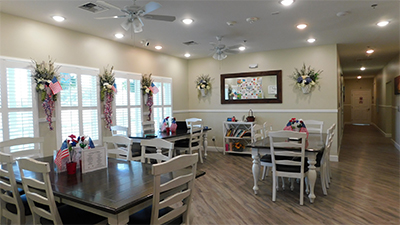
Boutique homes might likewise provide respite, but accessibility is less foreseeable because every bed represents a bigger portion of the home's capacity. When they can accommodate it, respite in a small home tends to feel more like sticking with extended family. Caregivers incorporate the short-term resident into daily life quickly, and the elder may get more private attention, specifically in the first days.
If you anticipate needing respite periodically since you are the primary caregiver, pay close attention to policies. Some neighborhoods require minimum stays of two weeks or more. Others have waiting lists. In smaller homes, ask how often they realistically have a spare room.
Key contrasts at a glance
Used thoughtfully, a brief contrast can clarify which direction to lean before you visit numerous websites. The following points are basic tendencies, not strict rules.
- Boutique assisted living: Smaller, home‑like environment; close relationships with personnel and citizens; often more flexible regimens; may handle greater care requirements on an individual basis; less on‑site features however a more powerful "household" feel. Large senior communities: More homeowners and staff; official activity programs and amenities; more layers of medical assistance such as on‑site nurses and therapists; clearer care level borders; greater social variety but risk of privacy for quieter residents. Boutique memory care: Calmer, less stimulating settings that can be ideal for nervous or quickly overwhelmed citizens; heavy reliance on personnel connection and relational care. Large memory care systems: Structured programs, safe outdoor spaces, and official dementia training programs; better suited for residents who still delight in group engagement and take advantage of robust activity schedules.
Use these contrasts as a compass, not a verdict. Many communities blend features from both models.
Safety, medical intricacy, and threat tolerance
Families not surprisingly concentrate on safety: falls, medication mistakes, wandering, and emergency response. The right level of safety oversight depends both on current health and on how quickly that health is changing.
In numerous store homes, the lack of long hallways and elevators implies fewer ecological threats. A caretaker might just be a few steps away at any time. Due to the fact that personnel know locals closely, subtle changes are seen more quickly. On the other hand, boutique homes hardly ever have nursing personnel on website 24/7. They might depend upon home health agencies, going to nurses, or outdoors doctors. For locals with unsteady medical conditions, that can be a limitation.
Larger senior communities generally operate with more medical facilities. You may see certified nurses on responsibility during the day, often all the time. Medication systems tend to be more formalized, with electronic records and double‑check processes. If your parent is taking ten medications and has repeating hospitalizations, this structure can minimize risk.
However, scale does not remove human error. Households in some cases assume a large structure automatically offers hospital‑level oversight. It does not. Assisted living, despite size, is a social and helpful model, not an acute medical one. When examining safety, ask candid, scenario‑based questions. How is a resident monitored if they start to refuse medications. What occurs at 2 a.m. If somebody appears suddenly confused and short of breath. How typically are vitals taken for somebody with heart failure.
Risk tolerance varies between households. Some prioritize an extremely medicalized environment even if it feels more institutional. Others prioritize comfort and emotional well‑being, accepting a modest increase in medical danger if it enables their loved one to reside in a setting that seems like home. There is no single right response, but naming your priority assists steer the choice.
Cost, agreements, and what "all‑inclusive" truly means
Money can not be separated from these choices. Shop homes and big senior communities price their services differently, and the details matter.
Boutique assisted living frequently charges a reasonably easy month-to-month charge that covers room, board, and personal care. Some run with tiered prices based on care levels, others with more personalized assessments. Since overhead is lower, regular monthly expenses can sometimes be slightly less than big communities in the exact same area, particularly in markets with high commercial property prices.
Large senior communities regularly unbundle costs. Rent, care, and additional services may each have their own line product. Features like transport, guest meals, or individual laundry might be additional. Memory care systems often cost more than standard assisted living houses within the very same school. When you compare, look not just at base rent but at a realistic total, consisting of forecasted care needs over the memory care next one to 3 years.
Respite care is typically priced at a daily rate that appears greater than the pro‑rated month-to-month rate, however keep in mind that it includes short‑term flexibility. Some neighborhoods will use a portion of respite payments toward a move‑in fee if the stay transforms to irreversible placement.
Be mindful with expressions like "all‑inclusive" and "aging in place." Ask what particular services are consisted of and what would trigger a rate boost or a needed relocate to a greater level of care. In store homes, the thresholds can be flexible however also highly specific. In larger neighborhoods, the limits are typically written into policy, which can supply clarity however often less room for negotiation.
Matching personality and history to the setting
Beyond health status and budget, character fit is often decisive. Two locals of the very same age and medical profile can have very different experiences in the same structure, depending upon who they are.
An older adult who likes structured activities, has constantly been socially engaged, and takes pleasure in range will likely thrive in a larger senior living community. Daily workout classes, lectures, video games, spiritual services, and outings can improve life profoundly. For such an individual, shop assisted living might feel quiet, even monotonous.
Another elder might be private, perhaps even a bit suspicious by personality, and discovers big groups draining. They might have lived in a small home for decades, hosted only close household, and eaten almost every meal at their own kitchen area table. For them, a small assisted living home with a handful of other homeowners and a predictably familiar staff can feel much closer to their lifelong norms.
Memory care citizens present unique intricacy. A previous engineer with early‑stage dementia, still physically active and intellectually curious, may do well in a large, lively memory care system that provides puzzles, jobs, and group activities. A person with more advanced dementia, susceptible to overstimulation and sound level of sensitivity, may soothe considerably in a boutique memory care home where sensory input is gently controlled.
Try to imagine not just the very first month after move‑in, when whatever is new, however the sixth and twelfth months. At that point, will this environment still feel appealing and safe to this specific person.
What to view and ask during tours
Tours can be overwhelming. Sales staff are trained to highlight features and deflect issues. A structured set of concerns assists you translucent the polish and understand how life will really feel.
Here is a concise checklist you can adapt:
- How numerous homeowners live here, and the length of time have most been here. Who, by role, will supply hands‑on care each day, and how long have they worked here. What particular assistance can you supply if my loved one's memory or movement decreases significantly. How do you manage medical concerns after hours and on weekends. Can I speak to a current family member privately about their experience.
Do not be shy about stepping far from the tour path. Ask to see a basic resident space, not just the model. Time out in typical areas without personnel guiding your look. Notice smells, noise levels, and small interactions in between personnel and homeowners. Those micro‑moments reveal far more about culture than any brochure.
If you are thinking about respite care as a trial, treat it seriously. Ask whether respite homeowners receive the exact same staffing and activities as permanent locals. In some locations, respite visitors are invited fully. In others, they can drift on the margins. This preview can strongly affect your final decision.
When a setting is "sufficient" versus perfect
Families typically carry heavy regret, looking for a best placement that simply does not exist. Every option, store or big, will include trade‑offs. A little home might lack an on‑site nurse however offer remarkable psychological warmth. A large community might feel hectic however provide unmatched scientific assistance and activity variety.
The question is not, "Which is perfect," but "Which setting suffices, offered our loved one's requirements, our capability, and our worths." That bar typically looks like this: security standards are solid, personnel are respectful and fairly steady, your loved one has at least some possibility of companionship or comfort, and the finances are sustainable long enough to matter.
Both store assisted living and big senior neighborhoods can satisfy that bar for assisted living, memory care, and respite care. The very best match emerges when you weave together health truths, personality fit, family logistics, and financial limitations with clear eyes.
If you can visit more than one of each type, patterns will start to emerge. By the time you reach your third or fourth tour, you will recognize which qualities are non‑negotiable for your family and which are choices you can bend on. That clearness, more than any single function, is what protects both the elder and the caregiver over the long term.
BeeHive Homes Assisted Living is an Assisted Living Facility
BeeHive Homes Assisted Living is an Assisted Living Home
BeeHive Homes Assisted Living is located in Cypress, Texas
BeeHive Homes Assisted Living is located Northwest Houston, Texas
BeeHive Homes Assisted Living offers Memory Care Services
BeeHive Homes Assisted Living offers Respite Care (short-term stays)
BeeHive Homes Assisted Living provides Private Bedrooms with Private Bathrooms for their senior residents
BeeHive Homes Assisted Living provides 24-Hour Staffing
BeeHive Homes Assisted Living serves Seniors needing Assistance with Activities of Daily Living
BeeHive Homes Assisted Living includes Home-Cooked Meals Dietitian-Approved
BeeHive Homes Assisted Living includes Daily Housekeeping & Laundry Services
BeeHive Homes Assisted Living features Private Garden and Green House
BeeHive Homes Assisted Living has a Hair/Nail Salon on-site
BeeHive Homes Assisted Living has a phone number of (832) 906-6460
BeeHive Homes Assisted Living has an address of 16220 West Road, Houston, TX 77095
BeeHive Homes Assisted Living has website https://beehivehomes.com/locations/cypress
BeeHive Homes Assisted Living has Google Maps listing https://maps.app.goo.gl/G6LUPpVYiH79GEtf8
BeeHive Homes Assisted Living has Facebook page https://www.facebook.com/BeeHiveHomesCypress
BeeHive Homes Assisted Living is part of the brand BeeHive Homes
BeeHive Homes Assisted Living focuses on Smaller, Home-Style Senior Residential Setting
BeeHive Homes Assisted Living has care philosophy of “The Next Best Place to Home”
BeeHive Homes Assisted Living has floorplan of 16 Private Bedrooms with ADA-Compliant Bathrooms
BeeHive Homes Assisted Living welcomes Families for Tours & Consultations
BeeHive Homes Assisted Living promotes Engaging Activities for Senior Residents
BeeHive Homes Assisted Living emphasizes Personalized Care Plans for each Resident
BeeHive Homes Assisted Living won Top Branded Assisted Living Houston 2025
BeeHive Homes Assisted Living earned Outstanding Customer Service Award 2024
BeeHive Homes Assisted Living won Excellence in Assisted Living Homes 2023
People Also Ask about BeeHive Homes Assisted Living
What services does BeeHive Homes Assisted Living of Cypress provide?
BeeHive Homes Assisted Living of Cypress provides a full range of assisted living and memory care services tailored to the needs of seniors. Residents receive help with daily activities such as bathing, dressing, grooming, medication management, and mobility support. The community also offers home-cooked meals, housekeeping, laundry services, and engaging daily activities designed to promote social interaction and cognitive stimulation. For individuals needing specialized support, the secure memory care environment provides additional safety and supervision.
How is BeeHive Homes Assisted Living of Cypress different from larger assisted living facilities?
BeeHive Homes Assisted Living of Cypress stands out for its small-home model, offering a more intimate and personalized environment compared to larger assisted living facilities. With 16 residents, caregivers develop deeper relationships with each individual, leading to personalized attention and higher consistency of care. This residential setting feels more like a real home than a large institution, creating a warm, comfortable atmosphere that helps seniors feel safe, connected, and truly cared for.
Does BeeHive Homes Assisted Living of Cypress offer private rooms?
Yes, BeeHive Homes Assisted Living of Cypress offers private bedrooms with private or ADA-accessible bathrooms for every resident. These rooms allow individuals to maintain dignity, independence, and personal comfort while still having 24-hour access to caregiver support. Private rooms help create a calmer environment, reduce stress for residents with memory challenges, and allow families to personalize the space with familiar belongings to create a “home-within-a-home” feeling.
Where is BeeHive Homes Assisted Living located?
BeeHive Homes Assisted Living is conveniently located at 16220 West Road, Houston, TX 77095. You can easily find direction on Google Maps or visit their home during business hours, Monday through Sunday from 7am to 7pm.
How can I contact BeeHive Homes Assisted Living?
You can contact BeeHive Assisted Living by phone at: 832-906-6460, visit their website at https://beehivehomes.com/locations/cypress, or connect on social media via Facebook
We are near Houston Premium Outlets, easy and close shopping while visiting mom in our assisted living home.